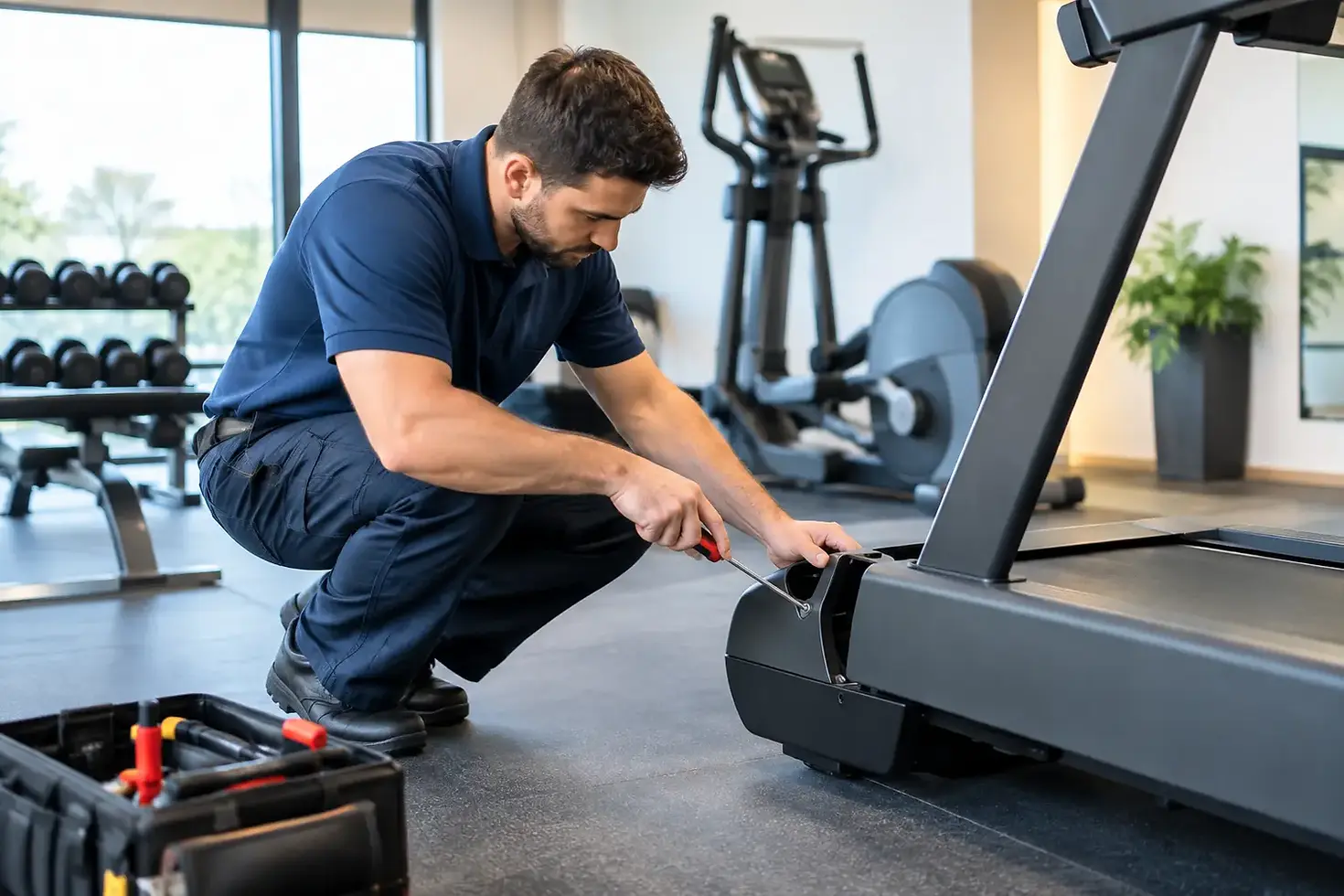
Hotel Fitness Room Repairs That Protect Guest Safety

A treadmill that stops mid-run, an elliptical with a grinding pedal arm, or a bike with a loose seat can turn a hotel amenity into a guest complaint quickly. Hotel fitness room repairs are not just about getting a machine running again. They protect guest safety, limit liability, preserve reviews, and keep one of your property's most visible amenities ready for use.
For hotel managers, engineers, and ownership groups in South Florida, the goal is clear: resolve the issue with as little disruption as possible. That requires a technician who understands commercial fitness equipment, can diagnose the real cause of the failure, and can work around the operating needs of an active property.
Why Hotel Fitness Equipment Needs Specialized Repair
Hotel fitness rooms see a different type of use than private home gyms. Guests may use equipment at all hours, often without staff nearby. Machines are operated by people of different sizes, fitness levels, and familiarity with the controls. That constant, varied use puts stress on belts, decks, rollers, bearings, drive systems, pedals, consoles, cables, and fasteners.
A general maintenance vendor may be able to identify an obvious loose bolt. But commercial cardio and strength equipment require equipment-specific knowledge. A treadmill error code may point to the motor, control board, incline system, speed sensor, wiring, or a belt-and-deck issue. Replacing the wrong part wastes time and money while the equipment remains out of service.
The same applies to ellipticals, exercise bikes, rowers, functional trainers, and selectorized strength machines. Proper hotel fitness room repairs start with a full diagnostic process, not a guess based on the noise a machine makes.
The Problems Guests Notice First
Guests may not know the technical name for a failing component, but they notice when equipment feels unsafe, noisy, or unreliable. Hotel staff should treat the following complaints as service signals rather than minor inconveniences.
Treadmills That Slip, Surge, or Stop
A slipping walking belt, inconsistent speed, burning smell, or sudden shutdown should take a treadmill out of service until it is inspected. These symptoms can stem from a worn belt and deck, a failing drive motor, inadequate lubrication, damaged rollers, or electrical issues. Continuing to operate the machine can turn a manageable repair into a more expensive replacement.
Ellipticals and Bikes With Noise or Movement
Clicking, grinding, wobbling, or uneven resistance is common on equipment that has accumulated heavy use. Pedal arms, crank assemblies, bearings, belts, resistance systems, and frame hardware all need inspection. A loose pedal or unstable machine presents an immediate fall risk, especially when a guest increases speed or resistance.
Console and Connectivity Failures
A blank display, unresponsive buttons, inaccurate workout data, or charging problems affect the guest experience even when the machine still moves. On connected equipment, software, network settings, power supply issues, and console hardware can all be factors. The correct repair depends on the model and the source of the failure.
Strength Equipment With Frayed Cables or Loose Hardware
Cable fraying, damaged pulleys, cracked upholstery, loose seats, and missing adjustment pins should never be ignored. Strength equipment stores and transfers force under load. A cable failure or unsecured component can cause serious injury. Remove the unit from use, post a clear out-of-service notice, and arrange professional service promptly.
Repair or Replace? Make the Decision With the Full Picture
Not every failed unit needs to be replaced. In many cases, a timely repair restores safe, dependable operation at a fraction of the cost of new equipment. Motors, belts, decks, rollers, bearings, pedals, cables, consoles, power components, and hardware can often be repaired or replaced when the rest of the machine is structurally sound.
Replacement may make more sense when the frame is damaged, key parts are no longer available, the unit has repeated major failures, or the cost of repair approaches the value of a comparable replacement. Age alone is not the deciding factor. A well-maintained commercial machine can remain a good asset, while a newer unit with neglected service may need substantial work.
Ask for a clear diagnosis and repair recommendation before approving work. A dependable service provider should explain the issue, identify the parts and labor involved, and help you weigh repair costs against expected remaining service life. That gives property managers a practical basis for budgeting instead of reacting to repeated breakdowns.
Fast Repairs Matter, but Safety Comes First
Hotels understandably want equipment back in service fast. A closed fitness room can affect guest satisfaction, particularly for business travelers and longer-stay guests who expect a reliable workout option. Still, a rushed repair without proper testing can create another failure or expose guests to unnecessary risk.
The best approach is to isolate the affected unit, inspect it correctly, complete the needed repair, and test it under operating conditions before returning it to service. For treadmills, that means more than seeing whether the console powers on. Speed response, belt tracking, incline function, emergency stop operation, and overall stability should be checked.
For strength equipment, cable travel, pulley alignment, selector pin engagement, adjustment mechanisms, and frame stability all matter. A machine is ready only when it operates safely and consistently.
Preventative Maintenance Keeps Small Issues Small
Emergency calls are sometimes unavoidable, but many hotel equipment failures develop gradually. Preventative maintenance gives operators a chance to catch wear before it becomes a guest-facing problem.
A scheduled maintenance visit typically focuses on cleaning dust and debris from critical areas, checking belt alignment and tension, inspecting decks and rollers, tightening hardware, reviewing cables and pulleys, examining pedals and crank systems, testing electronics, and identifying parts nearing the end of their useful life. The exact service needs depend on the equipment mix, guest volume, environment, and manufacturer recommendations.
Hotels near the coast should also consider the effect of humidity and salt air. Moisture can contribute to corrosion and electrical issues, while fine debris can build up in motors and moving components. Facilities with outdoor-adjacent fitness rooms, open doors, or high traffic may need more frequent inspections than a low-use indoor space.
Preventative maintenance also helps hotel teams plan. Replacing a worn belt or cable during a scheduled visit is easier than closing equipment unexpectedly during a busy weekend. It supports more predictable budgets and reduces the chance of multiple units failing at once.
Keep a Simple Equipment Service Record
A service record makes future decisions easier, especially when several people oversee the property. Track the make, model, serial number, installation date, reported issue, work completed, parts installed, and recommended follow-up. This information speeds up diagnostics and helps identify equipment with recurring problems.
It also gives management a clearer view of the fitness room as an operating asset. If a specific treadmill has needed repeated motor or electronics work, you have useful data for replacement planning. If a group of bikes only needs routine adjustments and cleaning, you can continue maintaining them with confidence.
Choosing a Hotel Fitness Repair Partner
Look for a provider that works on the brands and equipment types in your room, carries appropriate insurance, and can service equipment on-site. Experience with commercial treadmills, ellipticals, bikes, rowers, racks, cable machines, and strength units matters because each category has different failure points and service procedures.
Responsiveness matters, but communication matters too. Your team should know what failed, whether the unit must remain out of service, what repair is recommended, and what to expect next. For hotels in Palm Beach County and Broward County, Gympro Service provides on-site diagnostics, repairs, scheduled maintenance, installation, moving, and cleaning support for major commercial fitness equipment brands.
Protect the Guest Experience Before the Next Complaint
The fitness room may be a small part of a hotel footprint, but it can play a large role in a guest's stay. A clean, safe, fully working room signals that the property pays attention to details. Broken equipment sends the opposite message, even when the rest of the hotel is well maintained.
When a machine starts making noise, loses resistance, shows an error code, or feels unstable, take it out of service and address it early. Prompt, qualified repair keeps guests safer and helps your fitness room remain an amenity guests can actually rely on.


Comments