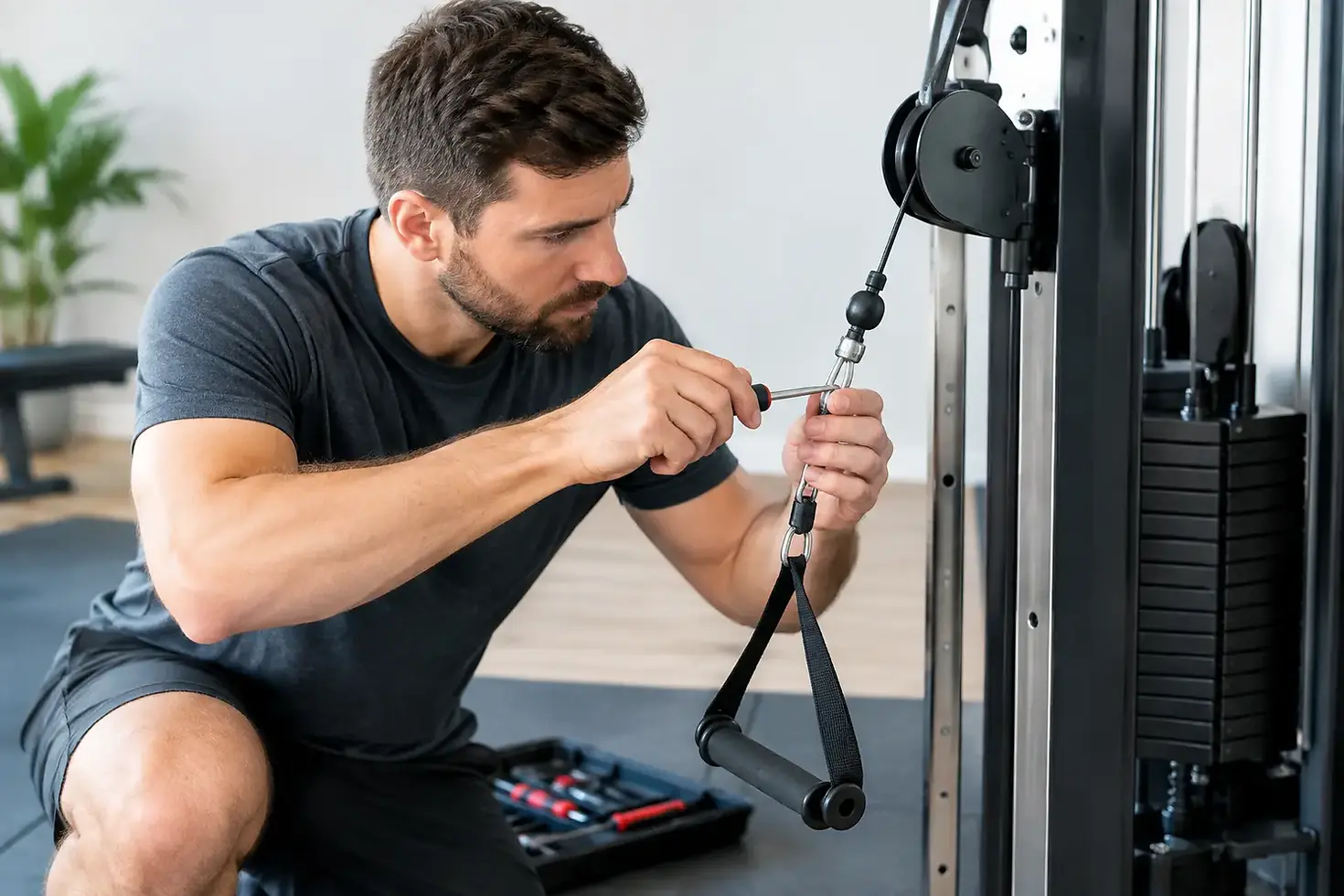
Bowflex Cable Repair for Safe, Smooth Workouts

A Bowflex that suddenly loses resistance, makes a snapping sound, or has a cable hanging loose is more than an interrupted workout. It can create a safety concern for anyone using the machine. Professional Bowflex cable repair identifies the source of the problem and restores proper resistance movement without risking further damage to the frame, pulleys, or power-rod system.
For homeowners, a broken cable can turn an expensive home gym into unused floor space. For apartment fitness rooms, hotels, and community gyms, it can mean complaints, reduced amenities, and unnecessary liability. The right repair starts with accurate diagnosis, because a cable issue is not always limited to the cable itself.
When Bowflex Cable Repair Cannot Wait
Stop using the machine if a cable is frayed, split, kinked, slipping off a pulley, or showing exposed inner strands. A cable under load can fail without much warning, especially during pulling movements where the user is close to the machine. Do not try to work around the problem by reducing resistance or using only one side of the unit.
You should also schedule service when the cable retracts unevenly, binds during motion, or feels noticeably different from one side to the other. These symptoms may point to a worn pulley, damaged pulley housing, loose hardware, poor cable routing, or a resistance component that is no longer aligned correctly. Continuing to train can turn a straightforward repair into a larger parts and labor issue.
A cable that has come completely off its pulley should be treated as an out-of-service issue. Reinstalling it without checking pulley condition and routing can cause the cable to rub against the frame or twist under tension. That friction shortens cable life and can damage other components over time.
Common Causes of Bowflex Cable Problems
Cable wear is often gradual. The outer coating can wear down after years of normal use, particularly where the cable repeatedly passes through pulleys or guide points. Dust, humidity, lack of cleaning, and misaligned components can speed up that wear. South Florida’s warm, humid environment can also be hard on equipment that is stored in garages, patios, or poorly climate-controlled rooms.
Improper assembly or a past equipment move can create problems as well. If a Bowflex was disassembled, relocated, and reassembled without confirming cable routing and hardware torque, the machine may operate for a while before a cable starts tracking incorrectly. This is common with larger home-gym systems that have multiple pulleys, crossover points, and moving arms.
The most common causes include:
Frayed or stretched cable from regular use and age
Worn, cracked, or seized pulleys that create excess friction
Incorrect cable routing after assembly, moving, or prior repair
Loose bolts, bent brackets, or damaged pulley housings
Resistance components or moving arms that are out of alignment
The exact cause depends on the Bowflex model and the machine’s service history. A compact unit may have a simple routing path, while a larger multi-station system can require careful inspection of several pulleys and connection points before the replacement cable is installed.
What You Can Safely Check Before Service
Before calling for service, unplug the machine if it has electronic components and remove any loose accessories from the workout area. Look for obvious cable fraying, missing pulley covers, loose bolts, or a cable that has slipped outside a pulley groove. Taking a few clear photos of the affected area can help document the issue and make parts identification easier.
Avoid pulling the cable hard to test it. Do not cut away damaged sections, tie knots in the cable, use clamps, or substitute a generic rope or wire. Fitness cables are built for specific lengths, end fittings, routing paths, and load demands. A temporary workaround may fail under resistance and place the user at risk.
It is also helpful to have the machine’s model name and serial information available. Bowflex has produced different generations of home gyms, including models with power rods, plate-loaded resistance, and more complex cable systems. Correct parts selection matters. A cable that appears similar may still have the wrong length, fitting, or load rating for the machine.
Why Cable Replacement Is Not a DIY Shortcut
Replacing a fitness cable looks simple until tension, routing, and alignment come into play. The cable must travel through the correct pulleys in the correct direction, without crossing, twisting, or rubbing against the machine frame. It must also connect properly at each endpoint so the resistance engages evenly through the full range of motion.
The trade-off with a do-it-yourself repair is clear: you may save money upfront, but an incorrectly routed cable can damage pulleys, bind during use, or fail early. It can also mask the original issue. If a pulley is seized or its bearing is worn, replacing only the cable leaves the underlying problem in place.
A trained technician checks the entire cable path, not just the visibly damaged section. That includes pulley condition, mounting hardware, frame alignment, resistance connections, cable ends, and overall movement. When replacement is needed, the technician can install the correct component, tension and route it properly, and test the machine under controlled resistance before returning it to service.
What a Professional Bowflex Cable Repair Visit Includes
A proper service visit begins with an inspection of how the machine moves. The technician checks whether the cable tracks smoothly, whether resistance is balanced, and whether any parts are creating friction or obstruction. This diagnostic step prevents unnecessary replacement of parts that are still serviceable.
If the cable is damaged, the replacement process includes removing the failed cable, inspecting pulley wheels and brackets, and installing a compatible replacement cable with the correct end fittings. The cable is then routed through the system, secured, and tested through the machine’s intended movement range.
The final check matters just as much as the installation. A reliable repair should confirm that the cable remains seated in each pulley, the handles and arms travel evenly, resistance engages as expected, and no rubbing, clicking, or binding remains. If other worn components are found, addressing them at the same appointment can help avoid another equipment outage soon after the cable repair.
For fitness facilities and property managers, this approach reduces downtime and gives staff confidence that the machine is safe to place back in service. For homeowners, it means getting back to a dependable workout routine without guessing whether the repair will hold.
Preventing Future Cable Failures
A Bowflex cable will last longer when the machine is kept clean, used as intended, and inspected before damage becomes visible. Wipe down cable paths and pulley areas regularly to remove dust and sweat residue. Keep the unit on a stable, level surface, and avoid storing heavy objects against the frame or cables.
Users should move through exercises with controlled repetitions rather than snapping the handles back into place. Fast release movements can place unnecessary shock on cable ends, pulleys, and resistance components. Facility operators should include cable checks in their routine equipment walkthroughs, especially on machines used by multiple residents, guests, or members each day.
Preventative maintenance is often the best value for shared fitness spaces. Scheduled inspections catch worn pulleys, loose hardware, and early cable abrasion before a machine becomes unusable. It also helps property managers plan repairs instead of responding to an unexpected out-of-order sign.
Local Service for Bowflex Equipment
Bowflex equipment requires a technician who understands fitness-machine mechanics, not a general repair approach. Gympro Service provides on-site fitness equipment diagnostics, repair, maintenance, assembly, and relocation support across Palm Beach County and Broward County. Fully insured technicians help residential and commercial customers address equipment problems with less disruption and more confidence in the finished work.
If your Bowflex cable shows wear, has slipped from its route, or no longer delivers smooth resistance, take the machine out of use and arrange a professional inspection. Addressing the issue early protects the equipment, the people using it, and the workout routine you rely on.


Comments