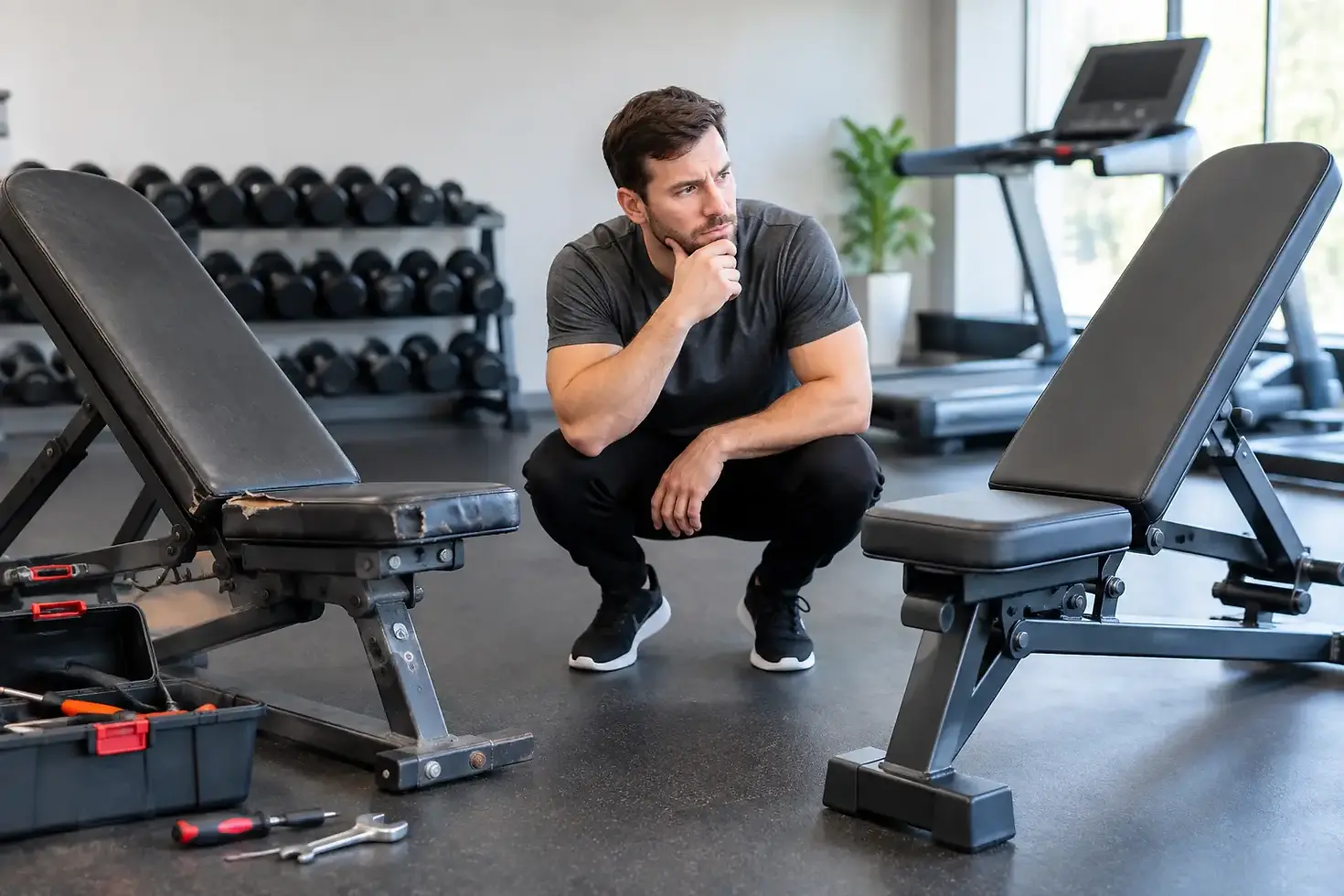
Repair Versus Replacement for Gym Equipment

A treadmill that stops in the middle of a member’s run or an elliptical that starts grinding during a hotel guest’s workout creates an immediate decision: repair versus replacement. The right answer is not always the cheapest option today. It is the option that restores safe, dependable operation while protecting your budget, your reputation, and your users’ experience.
For a home owner, that may mean getting a favorite exercise bike back in service without buying a new machine. For a gym, apartment community, hotel, or condominium, the decision can affect equipment availability, member satisfaction, and liability. A qualified equipment assessment turns a frustrating breakdown into a clear business decision.
Start With Safety and Equipment Condition
Safety comes before cost. A machine with a loose frame, damaged deck, unstable rack, worn drive components, electrical burning smells, or recurring power failures should not remain in service while someone decides what to do next. Tag the unit out, keep users off it, and have a trained technician inspect it.
Many problems look more serious than they are. A treadmill may need a belt adjustment, a deck inspection, a new drive belt, or a motor control diagnosis. An exercise bike may have a worn pedal, crank issue, resistance calibration problem, or console connection failure. Ellipticals and rowers often develop noise or inconsistent resistance from components that can be repaired or replaced individually.
On the other hand, structural damage, extensive corrosion, repeated electrical failures, or a machine that cannot be stabilized safely can change the recommendation. Repairing a unit that continues to create risk is not a cost-saving move. It is simply postponing a larger problem.
When Repair Is the Smart Choice
Repair is often the best value when the equipment has a solid frame, a reliable service history, and a problem isolated to a replaceable component. Commercial equipment is built for serviceability, and many quality residential machines can deliver years of additional use with the right repair and maintenance.
A repair generally makes sense when the failure involves a known, available part and the rest of the machine is in good working condition. Common examples include damaged belts, rollers, bearings, pedals, power switches, speed sensors, lift motors, console wiring, resistance components, and treadmill walking belts. These issues can interrupt workouts, but they do not automatically mean the entire machine has reached the end of its life.
Repair can also be the better choice when replacing the unit would create a larger operational disruption. A commercial facility may need to coordinate delivery access, disposal, assembly, installation, floor planning, and downtime for a replacement machine. If a timely on-site repair can return a quality unit to service, it may protect both revenue and member confidence.
For home fitness owners, repair is especially practical when the machine fits the space, meets the household’s workout needs, and has otherwise performed well. Replacing a treadmill or bike can involve moving challenges, delivery scheduling, assembly, and the uncertainty of choosing a new model. If the repair is straightforward and the equipment remains safe, restoring it is often the simpler path.
Consider the Age, Usage, and Brand Support
Age matters, but it should not be the only factor. A five-year-old treadmill in a high-traffic fitness center may have far more wear than a 10-year-old residential machine used a few times a week. Technicians should consider operating hours, user volume, maintenance history, environmental conditions, and the machine’s overall construction.
Part availability is equally important. Equipment from established brands may remain repairable for years because replacement components and technical support are available. When a manufacturer no longer supports a console, control board, motor, or other essential component, replacement becomes more likely. A professional diagnosis should identify not only what failed, but whether the required part is available and worth installing.
When Replacement Is the Better Investment
Replacement becomes the stronger option when repair costs are high relative to the machine’s remaining value and expected lifespan. This is not just a matter of comparing one repair invoice to one purchase price. Consider the likelihood of another failure, recurring service calls, lost uptime, and whether the equipment still meets your users’ needs.
A unit with repeated breakdowns is a warning sign. If the same treadmill has needed multiple electrical repairs, motor work, deck service, and console troubleshooting in a short period, the next repair may not provide lasting value. The same is true for bikes or ellipticals with chronic resistance issues, unstable electronics, or extensive wear across multiple systems.
Replacement may also be appropriate when equipment has become obsolete. Older machines can lack the durability, user features, compatibility, and safety expectations that customers now expect. In commercial settings, outdated equipment can make a gym floor feel neglected even when the machines technically operate.
For properties and hospitality facilities, replacement can support a better resident or guest experience. A new, properly installed machine may be quieter, more efficient, and easier to use. It may also reduce maintenance demands during busy seasons when equipment downtime is hardest to manage.
Watch for the Hidden Cost of Downtime
The purchase price is visible. Downtime is often not. A broken cardio machine can lead to complaints, missed workouts, negative reviews, and frustration for members who see equipment out of order week after week. In a fitness facility, one unreliable machine can also place extra wear on the remaining units as users shift to the equipment that still works.
There is also a labor cost. Staff members may spend time answering questions, posting signs, moving users to other equipment, or repeatedly trying to reset a machine. Property managers may have to coordinate access, vendor visits, and resident communication. A decision that appears less expensive on paper can become costly if it leaves the equipment unavailable for too long.
A Practical Repair Versus Replacement Framework
The best decision comes from a complete inspection, not a guess based on a noise, error code, or machine age. Before authorizing work, ask for a clear explanation of the failure, the condition of related components, the parts required, and the expected outcome after repair.
Use these questions to guide the decision:
Is the equipment safe to operate after the proposed repair?
Is the issue isolated, or are several major systems showing wear?
Are replacement parts available from a dependable source?
How does the repair cost compare with the value and expected remaining life of the unit?
Has this machine required repeated service for similar or unrelated issues?
What will downtime cost in member satisfaction, resident experience, or daily operations?
Would a replacement better meet current capacity, technology, or accessibility needs?
There is no universal percentage that decides every case. A modest repair on a heavily used commercial treadmill may be worthwhile if it prevents immediate downtime and the machine is otherwise in strong condition. A similarly priced repair on an aging residential unit with unavailable parts may not be sensible. The condition of the whole machine matters more than one number.
Prevent the Next Breakdown Before It Starts
The most cost-effective repair decision is often the one you avoid through preventative maintenance. Dust, sweat, vibration, loose hardware, worn belts, improper lubrication, and neglected adjustments gradually turn small issues into expensive failures. This is especially common in South Florida, where humidity and heavy use can affect electronic and mechanical equipment.
A regular maintenance plan helps identify problems before a machine becomes unsafe or unusable. Treadmills need belt, deck, roller, alignment, and drive-system checks. Bikes, ellipticals, rowers, strength units, and functional racks need inspections for fasteners, wear points, cables, pedals, resistance systems, and frame stability. Cleaning is part of the process as well, because buildup around motors, electronics, and moving parts can affect performance.
For commercial locations, scheduling maintenance around operating hours reduces disruption and gives managers a better view of upcoming costs. For homeowners, periodic service can extend the life of equipment that might otherwise fail from issues that were easy to correct early.
Get a Clear Recommendation From a Qualified Technician
The goal is not to repair every machine or replace every older unit. The goal is to make an informed decision that keeps people safe and equipment dependable. Certified technicians can diagnose the cause of the issue, evaluate overall condition, explain repair options, and help you plan for replacement when it is truly the better investment.
Gympro Service provides on-site fitness equipment repair, maintenance, installation, moving, and assembly support throughout Palm Beach County and Broward County. Whether you manage a busy fitness floor or need a home treadmill assessed, a professional evaluation can help you avoid unnecessary expense and extended downtime.
When a machine starts making noise, losing resistance, displaying errors, or operating inconsistently, address it before the next workout is interrupted. A prompt inspection gives you the information to repair with confidence or replace with a plan.


Comments