Why Gym Cables Fray and When to Replace Them

A cable machine can look ready for use right up until a worn cable becomes a safety problem. Understanding why gym cables fray helps gym owners, property managers, and home gym users address damage before a cable snaps under load, takes a machine out of service, or puts a user at risk.
Gym cables are wear components. They operate under tension, bend repeatedly around pulleys, and carry the force of every rep. Some surface wear is expected over time, especially in busy commercial settings. Fraying, exposed steel strands, crushed areas, or a cable that no longer tracks correctly are not normal conditions to ignore. They are signs the equipment needs a closer inspection and, in many cases, professional repair.
Why Gym Cables Fray During Normal Use
Most selectorized strength machines, functional trainers, cable crossovers, and home gyms use a steel wire rope covered by a protective nylon coating. The steel provides strength, while the coating helps the cable move smoothly through pulleys and reduces direct contact with machine components.
Every repetition creates bending and friction. As the cable travels over pulleys, individual wire strands flex. Over thousands of cycles, that movement gradually fatigues the cable. The protective coating may first show small scuffs, flattening, or cracking. If the issue continues, the steel cable beneath can begin to break or separate.
Usage volume matters. A cable on a residential machine used a few times each week may last for years. A functional trainer in an apartment gym, hotel fitness room, or commercial facility may handle constant use from many different users. High traffic does not automatically cause failure, but it does make routine inspections and preventative maintenance more necessary.
Load also plays a role. Machines are designed for their intended weight stacks and pulley paths. Repeatedly dropping a weight stack, allowing it to slam at the end of a rep, or using attachments in ways that pull the cable at an extreme angle can add stress beyond normal operating conditions.
Common Problems That Accelerate Cable Wear
A cable rarely frays for just one reason. In many service calls, the damaged cable is the visible symptom of another mechanical issue that needs to be corrected at the same time.
Worn or damaged pulleys
Pulleys should rotate freely and guide the cable smoothly. A pulley with a worn groove, cracked edge, seized bearing, or debris trapped in the channel can scrape the coating each time the cable passes through. This creates a concentrated wear point that can quickly cut through nylon and damage the steel strands.
Pulley alignment is just as important. If a pulley is bent, mounted incorrectly, or shifted out of position, the cable may rub against a bracket, frame edge, bolt, or pulley flange rather than staying centered in its track.
Poor cable routing or incorrect installation
After a move, assembly, repair, or cable replacement, a cable can be routed incorrectly through the machine. Even a small routing error can create abnormal rubbing or cause the cable to run at the wrong angle. The machine may still feel usable at first, but the cable will wear much faster than it should.
Incorrect cable length is another concern. A cable that is too long may allow slack that catches or rubs. One that is too short can place excessive tension on pulleys, fittings, and the weight stack. Proper replacement requires the correct cable specification, fittings, routing path, and tension adjustment for that machine model.
Dirty tracks and neglected maintenance
Dust, hair, chalk, grit, and cleaning residue build up inside pulley channels and around moving components. In South Florida, humidity can also contribute to corrosion on exposed metal parts, especially in garages, outdoor-adjacent fitness rooms, and facilities with inconsistent climate control.
Dirt inside a pulley groove acts like sandpaper. Moisture and corrosion can make pulleys rotate poorly or damage cable fittings. Routine cleaning and mechanical inspection help prevent small contaminants from becoming a cable failure issue.
Sudden impact and improper use
Weight stacks should return to the rest position under control. When users release handles and let the stack crash down, the cable, pulleys, guide rods, and frame absorb a sharp impact. Over time, this can loosen hardware, damage pulley bearings, and accelerate cable fatigue.
Improper attachments can also create problems. An attachment that catches on the frame, pulls from outside the intended range of motion, or is clipped to the wrong point may force the cable against metal. The result is often a localized worn spot rather than even wear across the cable.
Surface Coating Damage vs. a Dangerous Frayed Cable
Not every mark on a gym cable means it will fail immediately. Light discoloration or a small superficial scuff in the nylon coating may be cosmetic, depending on the location and condition of the cable. Still, it should be documented and monitored during regular equipment checks.
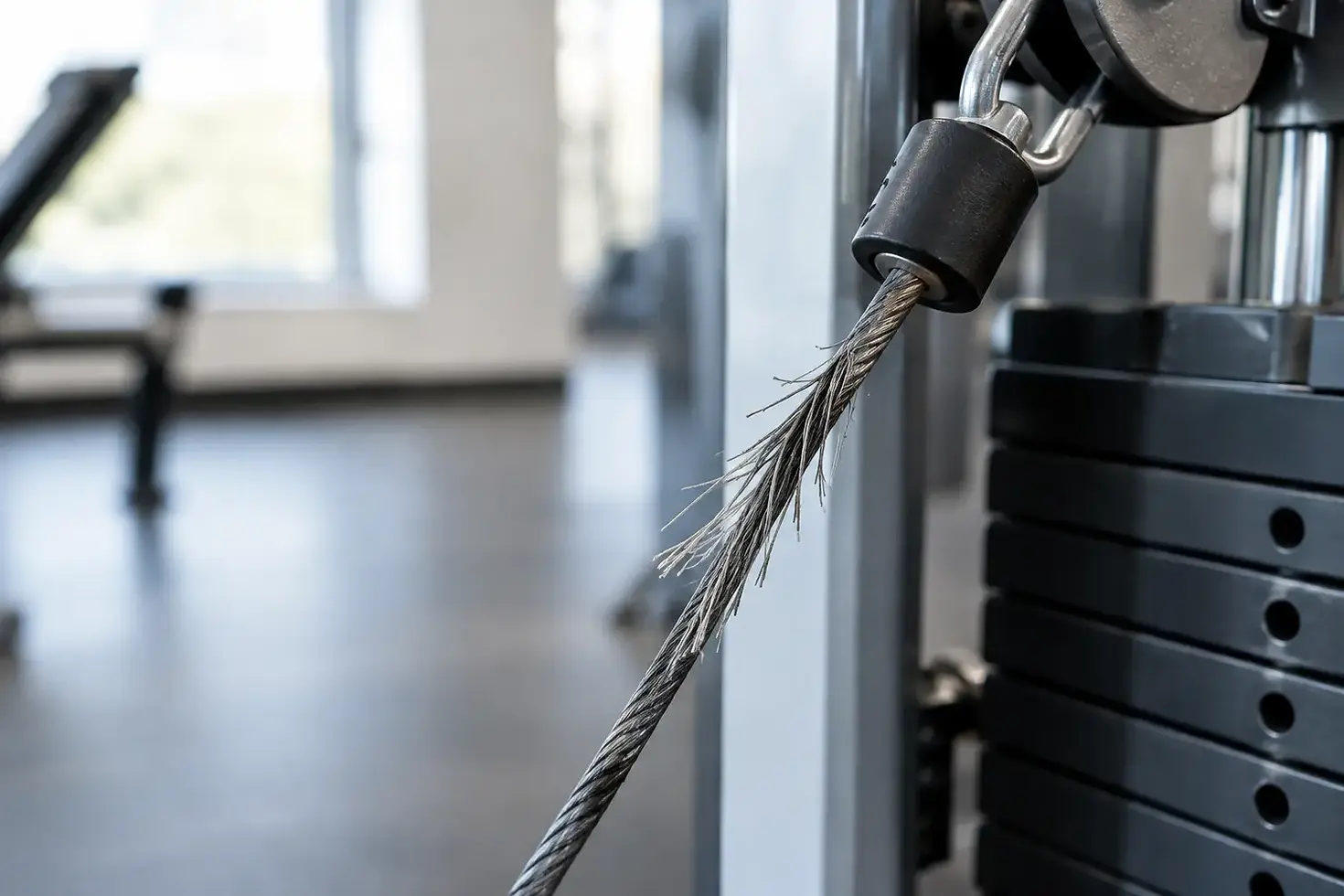
A cable should be removed from service when steel wires are visible, individual strands are broken, the cable feels rough or sharp, the coating is split or peeling extensively, or the cable has a flattened, crushed, kinked, or swollen section. Rust near fittings, loose end connections, and cable movement that jumps or catches in a pulley are also reasons to stop using the machine until it is inspected.
The key difference is structural condition. Once the inner wire rope is compromised, the cable no longer has its intended strength or predictable movement. Wrapping the area with tape, adding lubricant to hide friction, or continuing to use the machine at lighter weight is not a safe repair.
A frayed cable can fail suddenly, particularly when it is under load. On a multi-station machine or functional trainer, that failure can also damage pulleys, attachments, weight stacks, and nearby components. Replacing the cable early is usually less disruptive and less expensive than waiting for a complete break.
How to Reduce Cable Failure in Your Facility
Cable life depends on equipment design, usage level, environment, and maintenance history. A practical inspection routine gives staff and owners the best chance to catch wear early. During walk-throughs, look along the full visible length of each cable, not only the section near the handle. Watch the cable move through its complete range of motion and listen for scraping, clicking, grinding, or popping.
For commercial facilities, inspections should be more frequent on popular cable stations, functional trainers, lat pulldowns, and multi-gyms. Those machines often receive the highest number of repetitions each day. Residential owners should inspect cables after a move, new installation, long period of storage, or any time the machine begins to feel uneven.
Preventative maintenance should include checking pulley rotation, hardware tightness, cable routing, weight stack alignment, guide rods, and frame contact points. Cleaning the equipment is helpful, but a true maintenance visit goes further by identifying mechanical conditions that cleaning alone will not solve.
Staff training also makes a difference. Encourage users to control the weight stack, avoid dropping handles, report unusual noises immediately, and keep attachments properly stored. These simple habits reduce avoidable impact and help identify problems before a member or resident encounters a damaged machine.
When Professional Cable Replacement Is the Right Call
Cable replacement is not a generic cut-and-swap job. Cable diameter, coating type, end fittings, travel length, pulley routing, and tension all need to match the equipment. A cable that looks similar but does not meet the machine's specifications can create poor movement, premature wear, or unsafe operation.
A qualified technician should inspect the entire cable system before installing a replacement. If the original cable frayed because of a damaged pulley or misaligned bracket, installing a new cable without correcting the root cause simply starts the failure cycle again.
For facilities in Palm Beach County and Broward County, Gympro Service can inspect cable machines, diagnose the cause of wear, replace damaged components, and help keep strength equipment available for members, guests, tenants, and home users. Addressing cable damage promptly protects your equipment investment and helps limit avoidable downtime.
A cable machine should feel controlled, quiet, and predictable from the first repetition to the last. If a cable looks rough, tracks unevenly, or exposes metal strands, take that machine out of use and have it checked before the next workout turns a manageable repair into an injury risk.


Comments