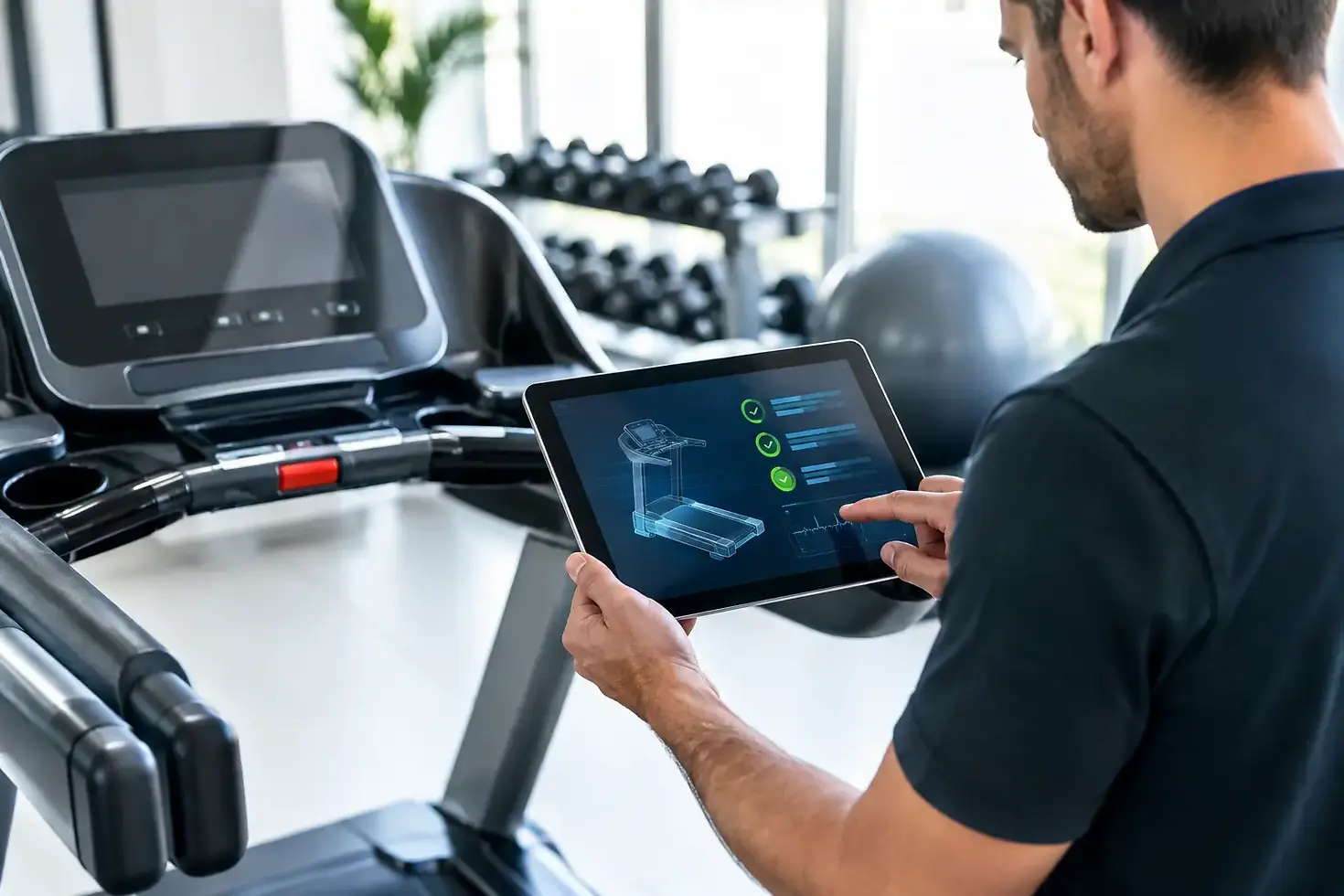
Digital Diagnostics for Fitness Equipment

A treadmill that stops mid-run, an exercise bike that will not power on, or an elliptical displaying an unfamiliar error code can disrupt far more than a workout. For a hotel fitness room, apartment gym, or busy commercial facility, one out-of-service machine affects member confidence, staff time, and daily operations. Digital diagnostics help identify what the equipment is reporting before a small issue becomes extended downtime or a safety concern.
Modern cardio equipment is built around more than motors, belts, pedals, and frames. Consoles, control boards, sensors, power systems, and software all work together. When one part fails or begins operating outside normal limits, the machine may log a code, shut down, run inconsistently, or continue operating in a way that requires professional attention.
What Digital Diagnostics Mean for Gym Equipment
Digital diagnostics are the process of reading and interpreting the electronic information produced by a fitness machine. Depending on the model, this may include fault codes, usage data, calibration results, motor performance readings, incline data, heart-rate or speed sensor feedback, battery status, and communication errors between the console and internal components.
A code on the screen is useful, but it is not always a final diagnosis. For example, a treadmill motor error can point to the motor itself, but it can also be related to a worn walking belt, excessive friction on the deck, a damaged wire, a speed sensor, a controller board, or an inconsistent power supply. The code tells a trained technician where to begin. Proper testing confirms what actually needs repair.
That distinction matters. Replacing parts based only on a displayed code can lead to unnecessary expense and repeat service calls. A hands-on inspection combined with electronic testing gives owners a more reliable answer.
Why Faster Diagnosis Protects Your Operation
Equipment downtime is costly even when the repair is straightforward. A commercial gym may have members waiting for a popular treadmill or bike. A property manager may receive resident complaints. A hotel may have a guest walk into a fitness center and find several machines marked out of order. At home, a broken machine can interrupt the routine that justified the original investment.
Digital diagnostic testing helps narrow the problem efficiently, which can reduce the time between the first service visit and a working machine. It also helps prioritize repairs. A cosmetic console issue may be inconvenient, while a slipping belt, failed emergency stop, unstable incline system, or electrical fault should be addressed before the equipment is used again.
For facility operators, the benefit is not simply speed. It is better decision-making. Knowing whether a machine needs a minor adjustment, a replacement part, deeper electrical testing, or retirement from service helps you allocate budget and avoid temporary fixes that do not last.
The warning signs that deserve attention
Not every equipment failure begins with a clear error message. Many machines provide early signals that something is changing. A treadmill may hesitate before reaching speed, produce a burning smell, trip a breaker, or feel rough underfoot. An elliptical may make a clicking sound during a stride, lose resistance, or show inconsistent resistance levels. A bike may have a blank console, unstable watt readings, loose pedals, or a resistance system that does not respond.
These signs do not always mean a major repair is needed. They do mean the machine should be inspected before the issue progresses. Continued use can place additional stress on motors, drive systems, belts, rollers, boards, and wiring. It can also create avoidable risk for users.
Digital Diagnostics Are Not a Substitute for Physical Inspection
Fitness equipment lives in demanding environments. Commercial machines may run for hours every day. In South Florida, dust, humidity, salt air in coastal locations, cleaning chemicals, and frequent temperature changes can affect electronics and mechanical components. Residential equipment can develop problems from incorrect assembly, limited lubrication, an uneven floor, or long periods without maintenance.
That is why an effective service visit combines digital readings with a physical inspection. A technician should check the power source, frame stability, emergency stop functions, belts, decks, rollers, pedals, drive components, wiring connections, fasteners, and signs of wear. The electronic system may identify a communication fault, while the physical inspection finds a loose connection or damaged cable causing it.
Calibration is another example. Some machines require calibration after a repair, move, software reset, or component replacement. A treadmill may need incline calibration. An exercise bike or elliptical may need resistance verification. Completing the repair without confirming the machine performs correctly under use can leave the underlying issue unresolved.
Equipment Types That Benefit From Electronic Testing
Digital diagnostics are especially valuable for cardio equipment because these machines rely on multiple electronic systems. Treadmills, ellipticals, exercise bikes, rowers, stair climbers, and connected training equipment often provide service menus and error reporting that can guide the repair process.
Brands and models vary widely. A Peloton bike, Precor treadmill, Life Fitness elliptical, Matrix bike, NordicTrack treadmill, Woodway treadmill, or Cybex unit may use different console systems, diagnostic procedures, and replacement parts. The same is true for home models from Sole, Bowflex, Horizon, ProForm, Nautilus, and other manufacturers.
Strength equipment can also need technical inspection, particularly functional racks, cable systems, selectorized units, and connected training stations. The diagnostic process may be less software-driven than with cardio equipment, but safety checks are just as important. Cable wear, pulley condition, loose hardware, frame stability, and damaged upholstery should never be treated as minor issues in a shared facility.
When a Reset Is Appropriate and When It Is Not
Many owners try a power cycle first, and sometimes it is reasonable. If a console freezes after a power interruption, turning the machine off, unplugging it for the manufacturer-recommended period, and restarting it may clear a temporary software issue. Confirm that the outlet, power cord, and surge protection are in good condition before assuming the machine itself has failed.
A reset is not a repair for recurring faults. If the same error returns, the machine shuts down during use, the belt slips, resistance changes unexpectedly, or there is any burning odor, sparking, unusual heat, or exposed wiring, take the equipment out of service. Repeated resets can hide a fault that needs proper testing.
Commercial operators should also avoid asking staff members to open motor covers, adjust live electrical components, or bypass safety features. That approach can create injury and liability concerns, and it may turn a manageable repair into more extensive damage.
Preventive Maintenance Makes Diagnostic Data More Useful
Digital diagnostic information is most valuable when it is part of a consistent maintenance plan. A machine that receives regular cleaning, lubrication where required, belt and fastener checks, calibration, and performance testing gives technicians a clearer baseline. Small changes are easier to identify before they become service interruptions.
For commercial facilities, scheduled maintenance should reflect equipment usage rather than a generic calendar alone. A hotel gym with light seasonal use needs a different schedule than a high-traffic apartment fitness center or full-service gym. Machines placed near windows, pools, entrances, or humid areas may need more frequent inspection because their operating conditions are tougher.
Keep a simple service record for each unit: model, serial number, purchase or installation date, error codes, prior repairs, parts replaced, and maintenance dates. This record helps identify repeat issues and supports smarter repair-versus-replace decisions. It is particularly helpful for facilities managing multiple brands and dozens of machines.
What to Expect From a Professional Service Visit
A qualified fitness equipment technician should begin by listening to the reported problem and observing the equipment in operation when it is safe to do so. From there, the technician can access available diagnostic information, inspect the relevant mechanical and electrical systems, test the machine under appropriate conditions, and explain the findings in clear terms.
The right repair depends on the age of the equipment, part availability, overall condition, and the role the machine plays in your facility. A newer commercial treadmill with a failed sensor may be an easy repair. An older unit with repeated board failures, worn mechanical components, and limited parts availability may require a more careful cost discussion. There is no single answer for every machine.
Gympro Service provides on-site diagnostic, repair, and preventative maintenance support for commercial and residential fitness equipment throughout Palm Beach County and Broward County. Certified, insured technicians can assess the problem at the equipment location, helping reduce guesswork and unnecessary downtime.
When a machine reports an error or starts behaving differently, treat it as useful information, not an inconvenience to ignore. Removing questionable equipment from use and arranging a professional evaluation protects your users, your investment, and the experience your facility is expected to deliver.


Comments