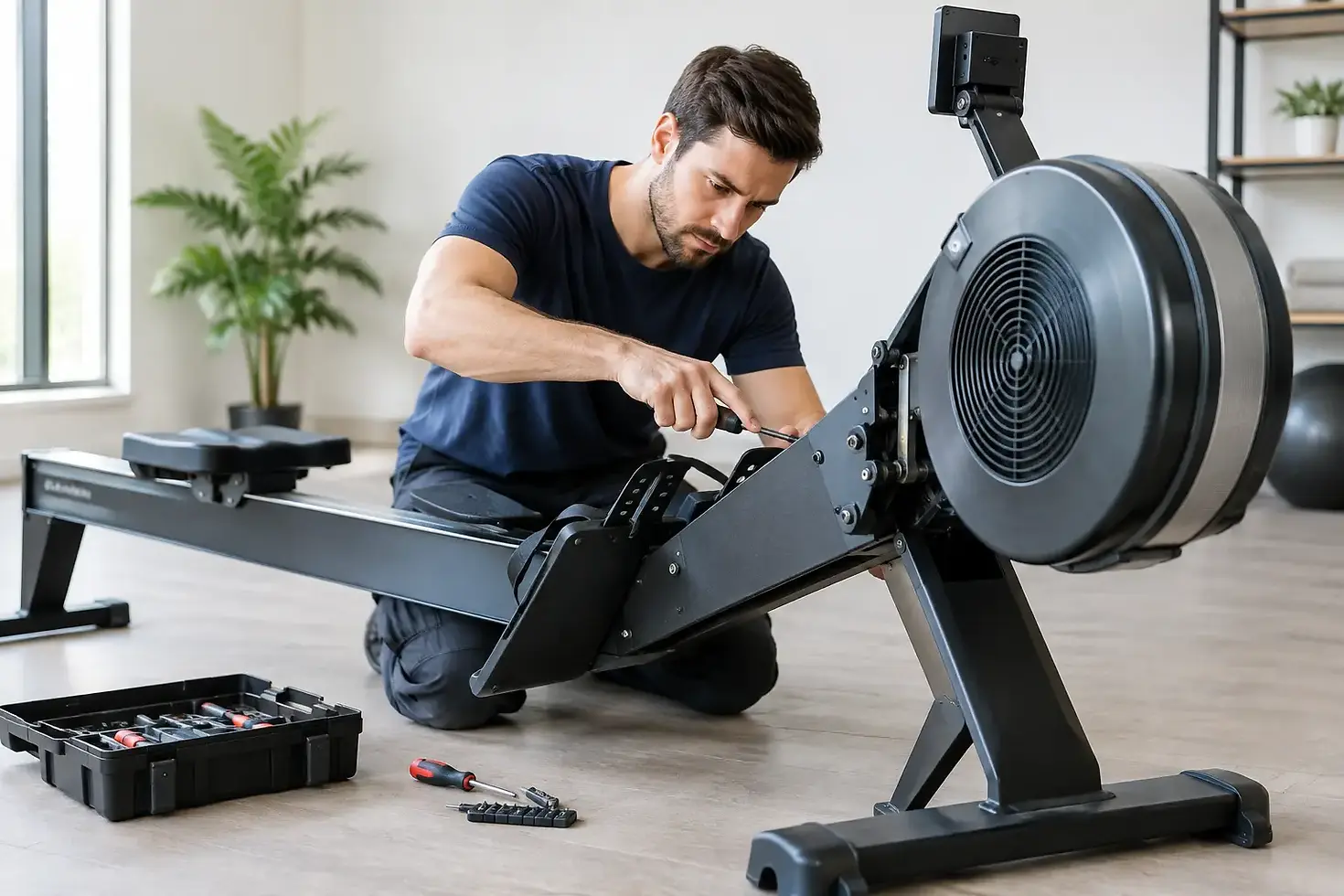
Rowing Machine Repair Cost: What to Expect

A rower that slips at the catch, displays no workout data, makes a grinding sound, or leaks resistance is more than an inconvenience. In a commercial gym, hotel, apartment fitness center, or home gym, it takes up valuable floor space while delivering a poor and potentially unsafe workout. Rowing machine repair cost depends on the machine type, the failed component, part availability, and whether the problem is caught early or allowed to worsen.
For owners in Palm Beach County and Broward County, the most useful question is not simply what a repair costs. It is whether a professional repair will restore reliable performance at a sensible cost compared with replacement. A proper on-site diagnosis provides that answer before money is spent on the wrong part.
Typical Rowing Machine Repair Cost Ranges
Most rowing machine service calls begin with a diagnostic visit. The technician checks the frame, rail, seat, handle, drive system, resistance mechanism, electrical connections, and console before recommending a repair. Diagnosis is especially valuable because the same symptom can come from several different causes. A noisy pull, for example, may be a dry chain, worn pulley, loose fastener, damaged bungee, or failing flywheel component.
Minor mechanical repairs commonly fall in the lower range when no major parts are needed. This can include tightening hardware, adjusting a chain or strap, lubricating approved components, correcting seat movement, or replacing small wear items. Costs increase when the repair requires a console, control board, resistance unit, flywheel assembly, or multiple components.
As a practical planning range, homeowners and facility operators may see costs such as these:
Diagnostic and service visits: often $100 to $200, depending on location and machine access.
Basic adjustments or minor wear-item repairs: commonly $150 to $350 total.
Replacement of chains, straps, handles, rollers, cords, or sensors: often $200 to $500, including parts and labor.
Console, electrical, or resistance-system repairs: frequently $350 to $900 or more, depending on the model and part price.
Major structural or resistance-unit replacement: can approach or exceed the value of an older residential rower.
These are planning figures, not a substitute for an inspection. Commercial units, smart-connected machines, water rowers, and premium magnetic rowers can have higher part costs. Travel, restricted access, urgent scheduling, and equipment located above ground level may also affect the final quote.
What Drives Rowing Machine Repair Cost?
The resistance system matters most
Rowers do not all work the same way. Air rowers use a flywheel and chain or belt drive. Magnetic rowers rely on magnets, motors, cables, and electronic controls. Water rowers use a sealed tank, paddles, and a drive system. Hydraulic rowers use cylinders that can lose resistance or develop leaks.
A simple chain adjustment on an air rower is generally less expensive than replacing an electronic resistance controller on a magnetic unit. A water tank that is cracked, leaking, or improperly sealed can require more involved labor and may make replacement the more practical choice on a lower-value machine. The repair should match the machine design, not just the visible symptom.
Parts availability can change the decision
A repair is only as practical as the available parts. Common replacement items such as straps, chains, seat rollers, foot straps, and certain sensors are often straightforward to source. Older models, discontinued brands, and proprietary electronic consoles can be different. If a manufacturer no longer supports a specific control board or display, a technician may be able to identify an alternative solution, but it is not always economical or advisable.
For commercial facilities, standardizing equipment can reduce future repair costs. When a gym has several rowers from the same manufacturer and model family, maintenance teams can stock compatible wear parts and technicians can service the units more efficiently.
Labor is shaped by access and condition
A rower may look simple from the outside, but access to the actual problem can take time. Some machines must be partially disassembled to reach a belt, pulley, sensor, wiring harness, or resistance assembly. Corrosion from humidity, loose hardware from heavy use, and prior incorrect repairs can add labor.
South Florida conditions make routine inspection worthwhile. Salt air near the coast, moisture in garages, and frequent use in shared fitness rooms can accelerate corrosion and wear. A machine with a small noise today can become a damaged drive system after months of continued use.
Residential and commercial use are not the same
A residential rower used three times a week experiences very different stress than a unit in an apartment gym used by dozens of residents. Commercial equipment is built for heavier use, but it also has more usage cycles, more user adjustments, and more opportunities for loose fasteners or damaged components.
For a facility operator, repair cost should include the cost of downtime. A rower that remains out of service can affect member satisfaction, create a negative impression in a hotel fitness center, or generate complaints from residents. Fast, accurate service often costs less than repeated temporary fixes and prolonged equipment outages.
Repair or Replace: How to Make the Call
Replacement is not automatically the right answer when a rower has an issue. A well-built commercial or premium home machine can often deliver many more years of service after a targeted repair. Replacing a drive strap, rollers, handle assembly, or approved resistance component is usually reasonable when the frame, rail, and main resistance system are otherwise in good condition.
Replacement becomes more likely when the rower has structural damage, recurring electronic failures, an unavailable major part, or repair costs close to half the price of a comparable replacement. Age alone does not determine the decision. A ten-year-old commercial rower that has been maintained may be a better repair candidate than a newer consumer model with an unsupported console and extensive corrosion.
Ask for a clear diagnosis that separates essential repairs from optional maintenance. That lets you decide whether to restore the machine now, schedule preventative work, or plan a replacement without guessing.
Problems That Should Not Wait
Some rowing machine issues can be monitored briefly, but others call for prompt service. Take the unit out of use if the handle cord or chain is frayed, the seat rocks or comes off the rail, the frame is cracked, the footrests are loose, the resistance changes unpredictably, or electrical components smell hot. These conditions can create injury risk and can turn a manageable repair into a larger failure.
Water leaks deserve quick attention as well. Even a slow leak can damage flooring, promote corrosion, and compromise the tank or seal. In a condo, hotel, or apartment property, delaying this type of repair can create avoidable property-management concerns.
How Preventative Maintenance Lowers Costs
The least expensive repair is often the one avoided through regular maintenance. Staff or homeowners can wipe down the rail and seat after use, check for loose fasteners, inspect straps and chains for wear, and keep the machine away from direct moisture. Only use lubricants or cleaning products approved for the specific model. Applying the wrong lubricant can attract debris or damage belts and plastic components.
Professional preventative maintenance goes further. A trained technician can inspect drive components, resistance performance, electrical connections, console operation, frame integrity, and mounting hardware before a user notices a problem. For commercial locations, scheduled service also creates a consistent record of equipment condition and helps plan budgets before multiple units fail at once.
Gympro Service provides on-site repair and preventative maintenance for rowers and other fitness equipment throughout Palm Beach County and Broward County. Certified, insured technicians can evaluate the issue, explain the recommended repair in practical terms, and help limit downtime for homes, gyms, hotels, and shared fitness facilities.
If your rower has changed how it feels, sounds, or tracks performance, do not wait for a complete breakdown. A timely inspection can protect your equipment investment, keep users safer, and get the machine back where it belongs - in regular use.


Comments